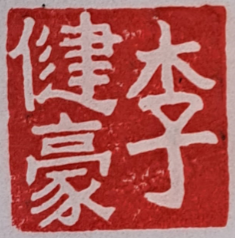
Walking the city should be a fun experience above all. I like eating things – that is not to say that all culture should be reducible to bite-sized parts, but I find myself most confident making cross-cultural comparisons chewing on its culinary constituents. Benjamin’s arcades or Pamuk’s experiences ambulating across Istanbul are my first introductions to the class’s methodology, their introspection conjures up a rich historical world of references and suppositions, far and away from the intimacy of many of the senses I’ve come to appreciate.
I wrote these entries over about 8 weeks, for a class. They come from the position of being a student in New York City, often on a budget; as a Chinese Singaporean with parents from two different countries and ethnic backgrounds converging on my home country; as a previous resident of Paris where I ended up living right next to another diasporic Chinese community (to be precise, a Southeast Asian ones, a sort of diaspora-squared). Bruno Carvalho has pointed out the paradox of visibility: that minoritized communities have often been culturally prominent, and pressed in service of a multicultural, multiracial narrative, a form of recognition without rights. Manhattan’s Chinatown feels like this, in contrast to other Chinatowns that I come to recognise over time as existing. My writing style hews more towards criticism or snippets of history: the archives are irresistible but also lacking, often, while I found that in the baby steps of my ethnography, Chinatowns are places that move fast. I am neither American, nor Chinese in the eyes of many people I wish I’d talk to, which does not pose an insurmountable barrier but requires far more effort to keep conversations going.
On the subway ride home from watching Jia Zhangke’s new film, Caught By the Tides, my friend jokingly tells me that it is the trial of every Chinese student at Barnard College to engage in an oral history of Chinese migration to NYC. What I hope to instead capture here are the pleasures of being in Chinatown, of the curiosity behind why I’ve wandered these places, without emptying these locations of the very real social conflicts that continue to exist. I became attuned to the ways repositories of knowledge and memories about Chinatown are in flux; library collections and archivists’ knowledge can be patchy or fade away from memory, a key pillar of the heritage ecosystem is actively complicit in the destruction of the neighborhood’s social and urban fabric, restaurants vanish leaving little trace, and many varieties of Chinese are spoken, only two of which I can navigate. It is hard to avoid what Sharifa Rhodes-Pitts notices about “turning my daily life into a hunt for “material”, but I have found that quieter observation has a way of disentangling one’s interactions with others into a quest for my journal’s subjects.
I only scratch the surface here, and there are many ways I thought about taking this assignment. Trying to recreate many recipes, maybe with a cuisine or even site-focused ontology; the aurality of music and culture, rather than rendering Chinatown a narrowly commercial or culinary space; the histories of labour and resistance from the International Lady Garment’s Union and other movements that have asserted Chinatown as a space for solidarity, rather than the assumption that Chinese and Chinese-Americans hew towards being inert, mute political subjects. The difficulty of being rigorous and following my thoughts to their full within the space of 500, maybe 800 words per entry. But what I do follow are my thoughts, and the unexpected associations I found myself drawing over the months of being attentive to Chinatowns. Very little here is new, but I hope you enjoy reading as much as I enjoyed writing this journal.
Ernest
Leave a Reply